Anxiety-Reducing Support in Pittsburgh, PA: Comfort-Tailored In-Home Care Techniques
Anxiety at home can be quiet—and still exhausting
 Photo by Freepik
Anxiety doesn’t always look like panic. A lot of the time, it looks like someone being “fine”… but tighter. Shorter answers. More hesitation. More second-guessing. The kind of nervous energy that turns simple tasks into big ones—because the brain is running a background program that keeps whispering, What if something goes wrong?
For seniors, anxiety at home can show up in sneaky ways:
- staying in one chair longer than usual
- avoiding showers because the bathroom feels risky
- skipping meals because cooking feels overwhelming
- calling family more often (or not calling at all, because they don’t want to be a burden)
- getting irritated quickly when plans change
- asking the same question repeatedly—not to annoy anyone, but to feel steady
And for families in Pittsburgh, that anxiety can turn into a loop: the senior worries, the family worries, everyone starts hovering, and the home starts feeling more like a fragile sit
That’s why people look for in-home care tailored to comfort in Pittsburgh PA. Not just “help with tasks,” but help that lowers stress in the room—help that makes the day feel predictable, safe, and human.
he day feel predictable, safe, and human.
What families notice first
Families often notice the tone before the tasks. It sounds like:
- “I just don’t feel up to it today.”
- “I’ll do it later.”
- “Don’t move anything.”
- “I don’t want anyone here.”
- “I’m okay, stop asking.”
Those are usually not “attitude problems.” They’re often anxiety trying to protect control.
The “everything feels harder” signal
A strong signal is when your loved one stops doing things they can do because it feels mentally heavier than it should. The body might be capable, but the nervous system is bracing. That’s where comfort-tailored care matters most—because it reduces the bracing.
Why anxiety can spike with age in everyday life
You don’t need a dramatic reason for anxiety to rise. Sometimes it’s the accumulation of small uncertainties.
Change, uncertainty, and sensory overload
Common anxiety drivers for seniors:
- routines changing (new meds, new sleep patterns, new aches)
- fear of falling or “not being steady”
- too many choices in a moment (what to eat, what to wear, what to do first)
- confusing paperwork or phone calls
- feeling rushed
- feeling watched
When a day has too many “figure it out” moments, anxiety fills the gaps.
The Pittsburgh factor: weather, stairs, and routines
Pittsburgh can add its own daily friction:
- steps at entryways and older homes
- hills that make short walks feel bigger
- gray weather that can make the day feel heavier
- winter conditions that increase fear of slipping
- carrying groceries up steps that used to feel easy
If your loved one is already anxious, those environmental stressors can make them default to avoidance: “I’ll just stay put.”
What “comfort-tailored” in-home care really means
Comfort-tailored care isn’t about treating someone like they’re fragile. It’s about designing support so the home feels easier to live in.
Comfort is physical + emotional + environmental
True comfort includes:
- physical comfort: pacing, warmth, safe movement, less strain
- emotional comfort: respect, choices, privacy, no pressure
- environmental comfort: calm lighting, fewer hazards, less clutter stress
When those three align, the senior’s nervous system stops sounding alarms all day.
Less pushing, more pacing
Anxiety gets worse when someone feels forced. Comfort-tailored support uses pacing:
- “We’ll do this step, then pause.”
- “We can do it after you rest.”
- “Do you want option A or option B?”
That approach reduces resistance and builds trust—because your loved one stays in the driver’s seat.
The Calm-First Toolkit
Here are practical techniques that caregivers use to reduce anxiety in normal, everyday moments—without making the day feel like therapy homework.
Technique 1: Predictable rhythm
A predictable rhythm is the #1 anxiety reducer because it removes uncertainty.
Same order, same time windows
Instead of a random “we’ll do stuff,” a calm rhythm looks like:
- settle in
- bathroom routine (if needed)
- hydration + small snack
- one task (laundry start, kitchen reset, mail)
- rest/reset
Predictable order helps seniors relax because they know what’s next.
Technique 2: Choice-based prompting

Photo by Freepik
Anxiety often spikes when people feel controlled. Choices give control back instantly.
Two options beats one command
Examples:
- “Shower today or wash-up today?”
- “Would you like breakfast first or meds first?”
- “Do you want to sit while we do this, or stand?”
Two options are magic because the brain stops fighting the idea of help and starts choosing how help happens.
Technique 3: The “base-camp” comfort setup
Base camp is the main chair or spot where your loved one spends the most time. A messy, inconvenient base camp creates anxiety because it leads to constant searching.
Reduce wandering and searching
A calm base camp includes:
- water within reach
- phone + charger
- glasses/remote
- tissues
- a small snack option
- a light throw blanket (warmth helps more than people expect)
When essentials are reachable, the day feels less demanding—and anxiety drops.
Technique 4: Soothing transitions
A lot of anxiety lives in transitions: sitting-to-standing, bedroom-to-bathroom, shower-to-dressing, day-to-night.
Before/after moments that prevent spirals
Caregivers reduce anxiety by making transitions smoother:
- setting out towels/clothes before bathing
- clearing a walking lane before standing
- turning lights on before movement
- doing one step at a time with pauses
- avoiding “hurry” energy
This prevents the “I’m overwhelmed, so I’m not doing it” shutdown.
Technique 5: Gentle grounding routines
Grounding doesn’t need to be complicated. It’s basically helping the body feel safe.
Simple senses-based comfort
Small grounding routines:
- a warm drink at the same time each afternoon
- soft music during chores
- sitting by a window for a few minutes
- a familiar show while folding laundry
- steady conversation that stays positive and concrete
The goal is to replace jittery uncertainty with familiar comfort cues.
Care techniques that reduce worry in the hardest parts of the day
Anxiety isn’t constant—it often spikes at predictable times. Comfort-tailored care targets those windows.
Morning launch
Morning anxiety often comes from stiffness, low energy, and too many steps stacked together (bathroom, getting dressed, breakfast). Helpful support includes:
- calm pacing (no rushing)
- simple breakfast/hydration setup
- choosing one small task—not ten
- setting the tone: “Easy morning. We’ve got time.”
Midday drift
Midday can feel too quiet. Quiet can turn into rumination. Support here might include:
- lunch prep and hydration
- light companionship
- a small, doable activity (mail sorting, short walk, porch time)
- resetting the space so the home feels calm
Evening landing
Evenings are when fatigue hits and anxiety increases. Helpful support includes:
- dinner setup that’s simple and familiar
- a bathroom routine that isn’t rushed
- night setup (water, phone, lights, clear path)
- calm wrap-down energy (no big changes late in the day)
Nighttime reassurance
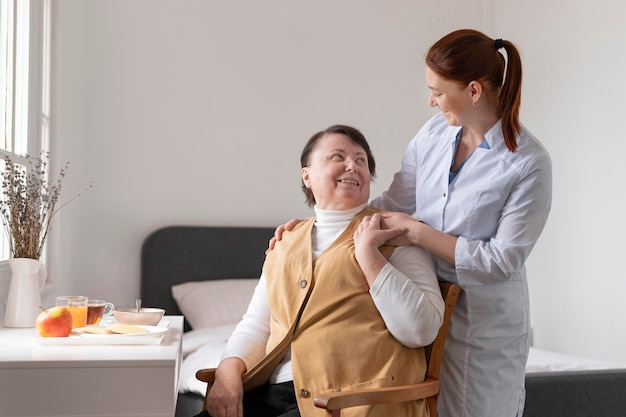
Photo by Freepik
Nighttime anxiety often isn’t about logic—it’s about vulnerability. Comfort-focused setup can include:
- clear path to bathroom
- easy lighting access
- bedside essentials
- a predictable last routine (water, settle, breathe, done)
Predictability is reassurance.
What caregivers can do (and say) to lower anxiety fast
Sometimes it’s not the task—it’s the delivery.
Tone, tempo, and body language
Caregivers who reduce anxiety tend to:
- move slower (tempo sets safety)
- keep their voice calm and steady
- avoid sudden changes
- give the senior time to respond
- narrate gently (“We’re going to stand, then pause.”)
A rushed tone can accidentally tell the nervous system, This is urgent, even when it isn’t.
Helpful phrases vs unhelpful phrases
Helpful:
- “We’ve got time.”
- “Let’s do one step at a time.”
- “Would you prefer this now or after you rest?”
- “You’re in charge—I’m here to make it easier.”
- “Let’s set things up so it feels comfortable.”
Unhelpful:
- “You’re fine.”
- “Don’t worry about it.”
- “Just do it.”
- “You already asked that.”
- “We have to hurry.”
The difference is simple: helpful language reduces pressure; unhelpful language adds it.
Home environment tweaks that calm the nervous system
You don’t need to redesign the whole house. Small tweaks can make the home feel less “loud” to the brain.
Lighting
Anxiety increases when the home feels dim or shadowy—especially in hallways and bathrooms. Practical comfort moves:
- brighter bulbs in key routes
- a lamp near base camp
- easy lighting for nighttime bathroom trips
Noise
Background noise can soothe or irritate. Comfort-tailored care may include:
- turning off loud news loops
- using soft music during routines
- reducing “multiple noises at once” moments (TV + phone + kitchen clatter)
Clut
Too many items on counters can feel mentally noisy. A caregiver can do small resets:
y noisy. A caregiver can do small resets:
- clear one surface
- create one “home” for essentials
- keep walkways open
The goal is not perfection. The goal is less visual stress.
Comfort cues: blankets, chairs, familiar items
Comfort cues work because they’re familiar:
- a favorite blanket
- a familiar pillow
- a consistent chair setup
- a “base-camp” basket with essentials
Familiarity is calming.
How Always Best Care delivers in-home care tailored to comfort in Pittsburgh
If you’re searching for in-home care tailored to comfort in Pittsburgh PA, the biggest difference you’ll feel is whether care is built around your loved one’s personality and stress triggers—not just a task list.
With Always Best Care, comfort-tailored support often focuses on:
Matching caregiver style to personality
Some seniors want a quiet presence. Others relax with friendly conversation. Some get anxious if someone moves their things. Others want help organizing. Matching reduces friction and helps care feel natural.
Consistency that builds trust
Anxiety drops when the routine becomes familiar:
- familiar caregiver faces when possible
- consistent timing
- consistent order of tasks
- consistent “no surprises” approach
When care is consistent, the senior’s nervous system stops bracing.
Practical updates that reduce family check-ins

Photo by Freepik
Families often hover because they’re unsure what happened that day. Clear, practical updates reduce that worry loop:
- meals/hydration supported
- routines completed comfortably
- any stress triggers noticed
- what helped calm things (music, pacing, timing)
When families feel calmer, seniors feel less monitored—another comfort win.
A table you can screenshot: anxiety trigger → care response → calm payoff
|
Anxiety trigger |
Comfort-tailored care response |
Calm payoff |
|
Too many decisions |
offer 2 clear choices |
less resistance, more control |
|
Fear of falling |
calm pacing + clear walking lanes |
safer movement, less bracing |
|
Overwhelm with chores |
do one task at a time + pauses |
less shutdown, more participation |
|
companionship + gentle routine |
steadier mood |
|
|
Night worry |
predictable night setup |
fewer anxious evenings |
|
Family hovering |
consistent updates |
calmer household dynamics |
A 7-day comfort plan families can try
If you want something simple to start with, try this week-long approach. No perfection required—just consistency.
Days 1–2
Focus: reduce immediate friction
- set up base camp essentials
- clear the main walking lanes
- simplify the day to 1–2 tasks
- build a calm rhythm (snack + hydration first)
Days 3–5
Focus: strengthen predictability
- keep the same visit time window if possible
- keep tasks in the same order
- use choice-based prompts
- add one gentle grounding routine (music, porch sit, warm drink)
Days 6–7
Focus: protect the best results
- keep what worked
- remove what created stress
- shift timing if anxiety spikes at a specific time (often evenings)
- aim for “steady,” not “busy”
Anxiety doesn’t need a dramatic cause to steal comfort at home—it only needs uncertainty, rushing, and too many hard moments stacked together. Comfort-tailored in-home care lowers anxiety by making the day predictable, the environment calmer, and routines easier to complete without pressure. If your family is looking for in-home care tailored to comfort in Pittsburgh PA, Always Best Care can help create a calm-first routine that supports safety, dignity, and peace of mind—so home feels like a place to relax again, not a place to brace.